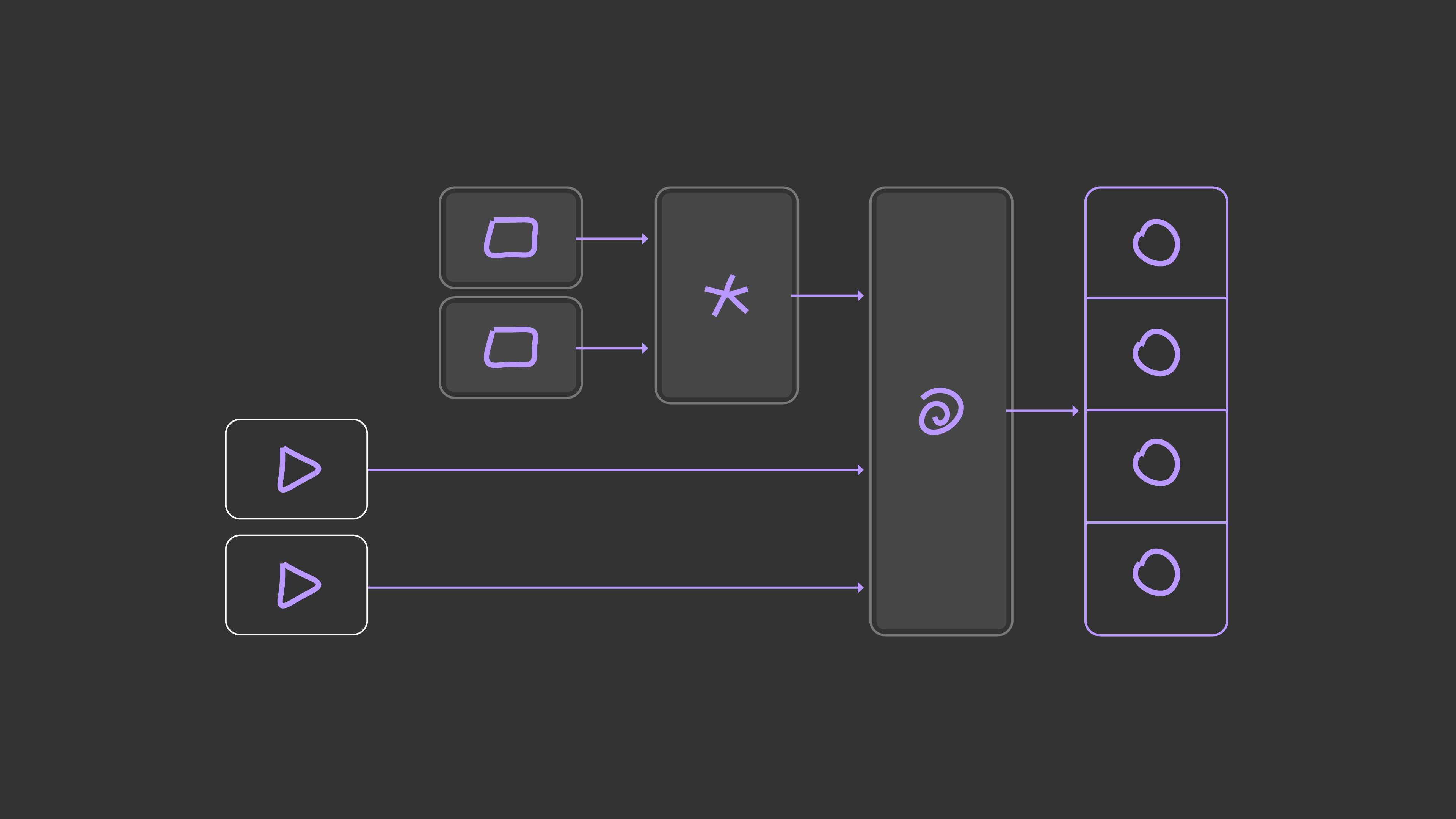
In our recent blog, we talked about the four dimensions of hearing intelligence: User, Device, Environment, and Content. Those dimensions describe what the system needs to understand. Now, we want to dive into the system itself and the architecture that actually turns that understanding into sound, layer by layer, in real time.
How the system is built
Five functional layers work together to understand the listener, interpret context, and continuously adapt sound in real time.
![[lightbox]](https://cdn.prod.website-files.com/6818bfbe7d79e080f9ab7199/6a79a1dc4e8d763afd749f4e_mimi-blog-hearing-aid-signal-processing-path.png)
01) Input: what goes into the system
Every response starts with raw signals and data entering the system: media audio, voice call audio, or ambient sound picked up from the environment. At this stage, nothing has been interpreted yet, it is simply captured.
02) Context: what the system notices and understands
The system builds awareness from that raw signal across several dimensions at once: what kind of acoustic environment this is, what direction sounds are coming from, whether speech is present, and how the listener hears, established through a personalized hearing profile and calibrated to the device being used.
03) Decide: what the system should do and how
With context established, the system makes a series of real-time judgment calls. It translates the listener's hearing profile into the right processing parameters, decides when and how to respond to what's happening around them, and continuously checks that any response stays safe and comfortable, guarding against feedback, sudden loud sounds, or unstable signals. If the wearer is speaking, it also decides how to handle their own voice, so amplification doesn't make them sound unnatural to themselves.
04) Process: what the system does to the audio
At the process stage the decisions then become action. Sound levels are adjusted in real time across frequency bands, transient peaks are controlled, and output is stabilized to stay consistent as conditions change. Frequencies are reshaped to maintain a natural tonal balance. And speech is separated from background noise, whether that's a live conversation or dialogue within streamed media, so it stays clear without sounding artificially processed.
05) Outcome: what the user experiences
The result lands with the listener, but what that result looks like depends on the product. It might mean clearer face-to-face conversation, more natural transparency listening, dialogue that's easier to follow in media, or simply not needing to reach for the volume control. Different outcomes, but always the same underlying promise: less effort, more clarity, without the listener having to manage it themselves.
The system in action
Here's an example with one of our products Mimi Sound Personalization:
![[lightbox]](https://cdn.prod.website-files.com/6818bfbe7d79e080f9ab7199/6a7b2b268ccea4bf70bb5ea7_mimi-sound-personalization-product-architecture.png)
- Input is the type of streamed media the user is listening to, for example, voice calls or media audio.
- Context establishes how the user hears, through a Mimi hearing test.
- Decide converts that user-specific hearing data into optimized signal processing parameters, bridging audiological models and real-time audio processing.
- Process adjusts sound levels in real time across multiple frequency bands, applying those parameters directly to the input signal.
- Outcome for the user is sound tailored to their individual hearing, a clearer and more balanced listening experience, greater detail without increasing volume, and reduced listening fatigue.
Built to adapt
This architecture is designed around three principles that shape how it actually gets used in products.
Continuous loop
The system continuously interprets environmental signals, understands context, and adjusts audio behavior, reducing the need for manual user control. The listener shouldn't have to notice the system working, only the result of it.
Configurable architecture
Different products engage different layers of the system, from signal input and audio adaptation to full-context orchestration and intelligent response behavior. Not every product needs every layer. A simpler integration might rely on Input and Process; a more advanced one might run the full five-layer loop.
Mimi Dialogue Focus, for example, runs a lean path: Input straight through to Process and Outcome.
![[lightbox]](https://cdn.prod.website-files.com/6818bfbe7d79e080f9ab7199/6a7b2b398715b59eb5064e55_mimi-dialogue-focus-product-architecture.png)
Mimi Noise Adapt reads the environment through Context, then makes a decision on how to respond, then compensating for masked audio in the Process stage.
![[lightbox]](https://cdn.prod.website-files.com/6818bfbe7d79e080f9ab7199/6a7b2b5a9995f5e93f96b40b_mimi-noise-adapt-product-architecture.png)
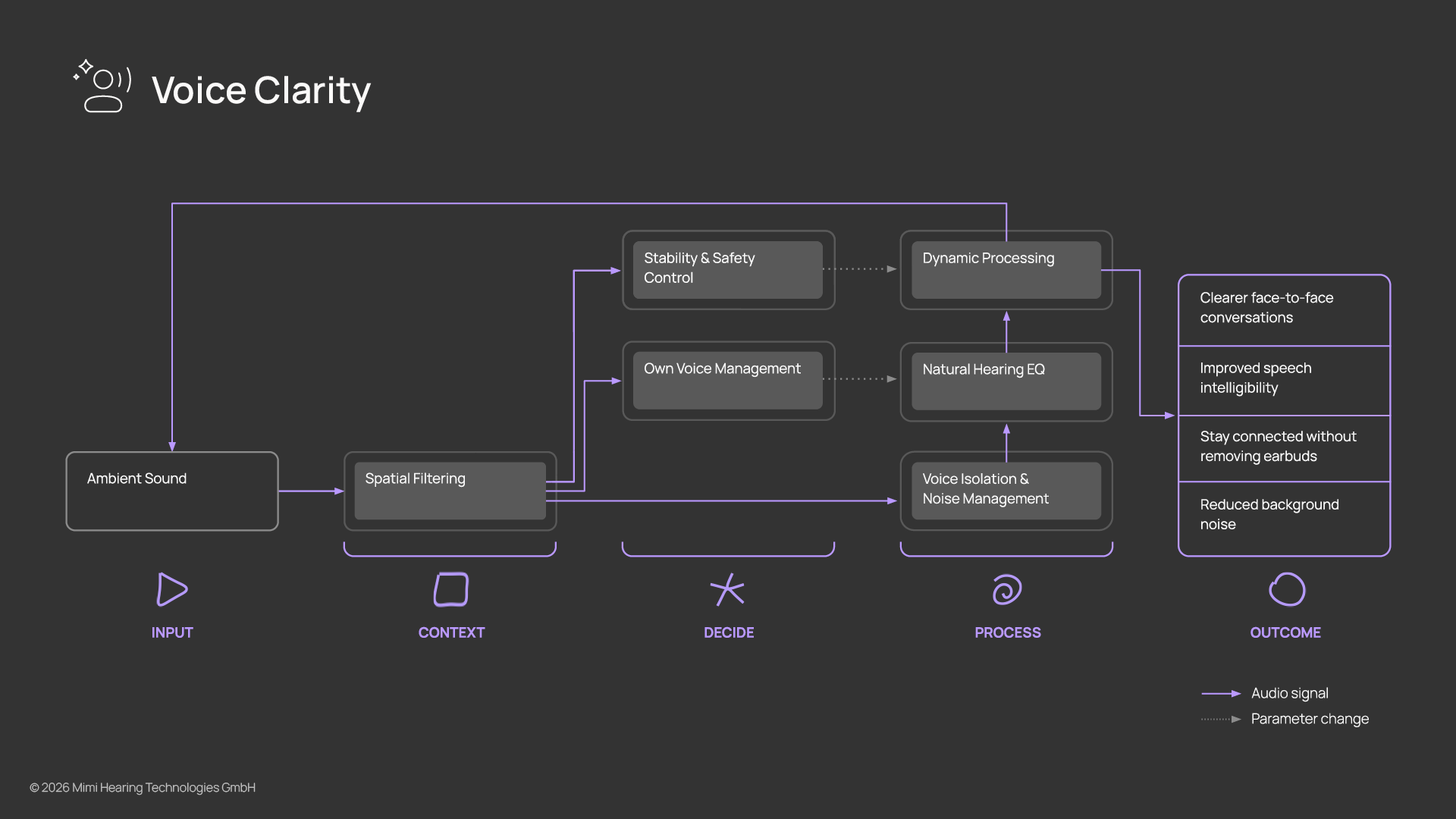
Mimi Voice Clarity runs the full five-layer loop, with multiple parallel checks happening across Context, Decide, and Process at once.
Modular integration
Partners can integrate individual components or tailored combinations to enable deeper system intelligence across devices and form factors. This is what allows the system to scale, from a narrow capability to a fully orchestrated, context-aware experience, depending on what a product needs.
The architecture behind every product
This system architecture is what sits underneath every product and solution within the Mimi platform. Each integration draws on exactly the layers it needs from a single, shared foundation, lean where a product calls for it, fully orchestrated where required. For partners, that means building on proven technology without having to design it from the ground up, configuring exactly the intelligence a product needs rather than building it from scratch.
Find out more
Want to find out more about hearing intelligence? Read more in our earlier post, Hearing intelligence: the four dimensions.
Ready to bring this system into your product? Contact our sales team to talk through what a Mimi integration could look like for you.