System Architecture
Hearing intelligence is made up of individual technology modules, each built for a specific purpose. Mimi partners can integrate a tailored combination of these modules to fit their product requirements.
How the system is built
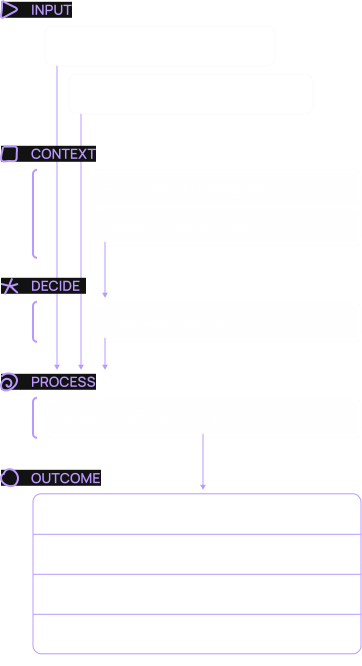
Five functional layers work together to understand the listener, interpret context, and continuously adapt sound in real time.
INPUT
What goes into the system
Every response starts with raw signals entering the system: media audio, voice call audio, or ambient sound. Nothing has been interpreted yet, it's simply captured.
CONTEXT
What the system perceives
The system builds awareness from that signal across several dimensions: the acoustic environment, sound direction, whether speech is present, and how the listener hears.
DECIDE
What the system should do and how
With context established, the system makes real-time judgment calls, translating the hearing profile into processing parameters and checking that any response stays safe and comfortable.
PROCESS
What the system does to the audio
Decisions become action. Sound levels are adjusted in real time across frequency bands, transient peaks are controlled, and speech is separated from background noise.
OUTCOME
What the user experiences
Every product delivers a different outcome: clearer conversation, easier dialogue, or simply not reaching for the volume control. Always less effort, more clarity.
What goes into the system
Every response starts with raw signals entering the system: media audio, voice call audio, or ambient sound. Nothing has been interpreted yet, it's simply captured.
What it perceives
The system builds awareness from that signal across several dimensions: the acoustic environment, sound direction, whether speech is present, and how the listener hears.
What it should do and how
With context established, the system makes real-time judgment calls, translating the hearing profile into processing parameters and checking that any response stays safe and comfortable.
What it does to the audio
Decisions become action. Sound levels are adjusted in real time across frequency bands, transient peaks are controlled, and speech is separated from background noise.
What the user experiences
Every product delivers a different outcome: clearer conversation, easier dialogue, or simply not reaching for the volume control. Always less effort, more clarity.
Technology modules
Every module sits within Context, Decide, or Process, the stages where the system understands, triggers, and adapts.
CONTEXT
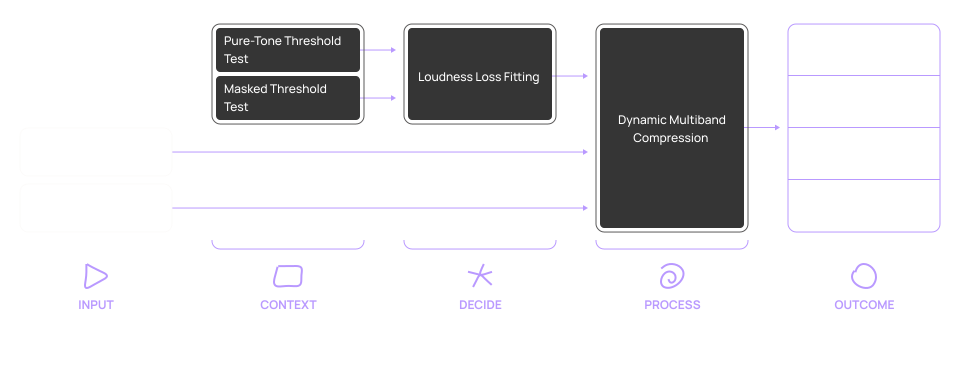
Measures the quietest sounds you can hear at different frequencies to create a precise, personalized hearing profile.
Measures the quietest level of a pure tone that can be perceived in the presence of noise at a specific frequency.
Determines acoustic characteristics of headphones to ensure reliable hearing test results across different hardware.
Analyzes ambient audio to identify and interpret different types of environmental noise, enabling the device to understand its acoustic surroundings.
Detects the presence of speech within the audio signal, enabling the system to prioritize voice processing and enhance speech intelligibility in real time.
Analyzes the spectral characteristics of the surrounding noise to determine which frequency regions of the audio signal are most affected by masking. This enables targeted restoration of masked audio components rather than applying uniform amplification across the signal.
A beamforming system that analyzes the spatial direction of incoming sound to identify and prioritize speech coming from the front while reducing competing noise from surrounding areas. By continuously adapting to the acoustic environment early in the processing chain, it supports clearer speech intelligibility in face-to-face conversations.
DECIDE
Converts user-specific hearing data into optimized signal processing parameters, bridging audiological models and real-time audio processing. Inputs such as hearing thresholds or demographic estimates are processed to define gain, compression, and frequency shaping parameters.
Determines when and how the system should respond based on context signals, selecting the appropriate behavior and coordinating real-time transitions between processing states to ensure a consistent and natural listening experience.
Continuously evaluates signal stability, feedback risk, sudden loud sounds, and gain limits to determine the safest and most effective audio response. Using impulse-based automatic gain control (AGC) and adaptive feedback cancellation (AFC), it dynamically adjusts processing to maintain stable, comfortable, and distortion-free listening conditions.
Detects when the wearer is speaking and dynamically adjusts amplification to maintain a natural perception of their own voice. It determines when to reduce self-voice amplification to prevent unnatural loudness or occlusion while preserving awareness of surrounding conversation.
PROCESS
Adjusts sound levels in real time across multiple frequency bands, adapting to changing input dynamics to maintain clarity, balance, and listening comfort.
Applies AI-driven voice isolation to media audio, enhancing dialogue clarity by separating speech from background sounds such as music or effects.
A real-time dynamic processing system that continuously manages signal level and dynamic range across changing acoustic conditions. Using expansion, compression, limiting, and automatic gain control (AGC), it amplifies low-level speech signals, controls transient peaks, and stabilizes output levels to preserve intelligibility, listening consistency, and downstream processing performance.
Applies controlled frequency shaping to maintain natural tonal balance and spectral consistency across the audio signal. Designed to preserve environmental transparency, it conditions the signal for downstream processing while supporting more natural and consistent listening across different acoustic environments.
AI-based Voice Isolation Engine that intelligently separates speech from background noise in real time, reducing distractions and improving speech intelligibility in complex listening environments.
Product architecture
Explore how each Mimi product engages a different combination of system layers and technology modules to shape the listening experience


Personalizes audio in real time using individual hearing profiles to restore detail, enhance sound quality, and improve speech clarity.


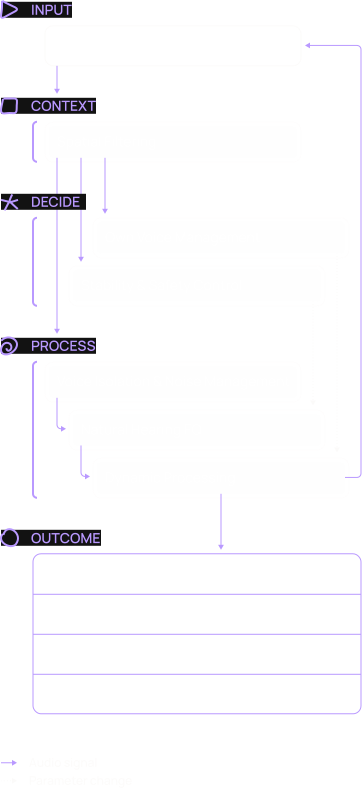
Enables clearer face-to-face conversations in noisy environments through advanced AI-powered processing.



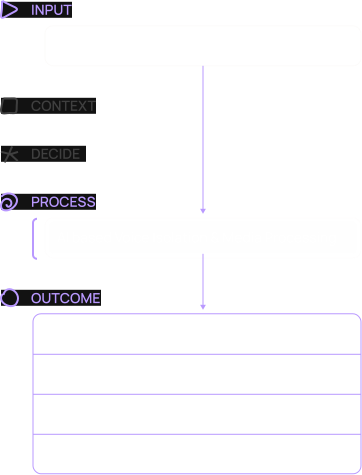
Advanced dialogue enhancement for media playback on TVs, smartphones, and in-flight entertainment systems.



Purpose-built for Open Wearable Stereo (OWS) devices, Noise Adapt enhances streamed media playback by restoring audio components masked by environmental noise

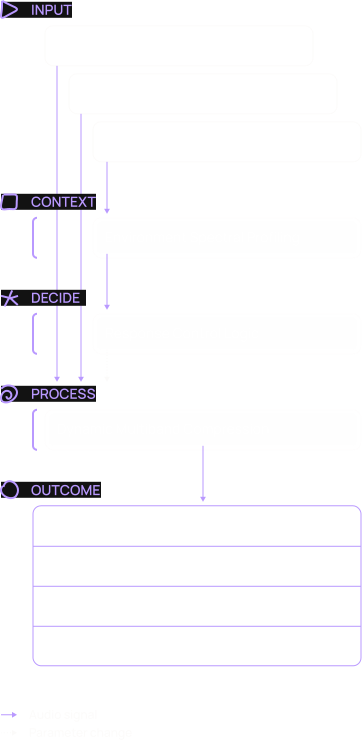

Awareness layer that understands the acoustic environment and orchestrates audio behavior across existing device features and other Mimi features.


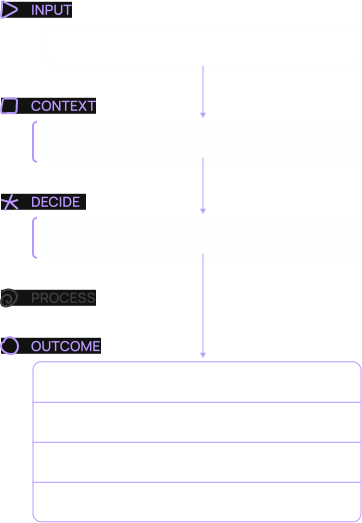

Personalizes audio in real time using individual hearing profiles to restore detail, enhance sound quality, and improve speech clarity.


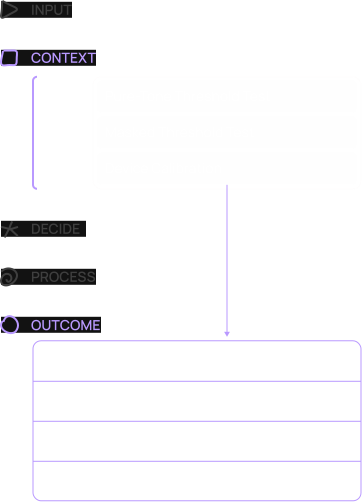
Hearing intelligence framework
Every module within this architecture powers one goal: adapting sound in real time to the listener, device, environment, and content.